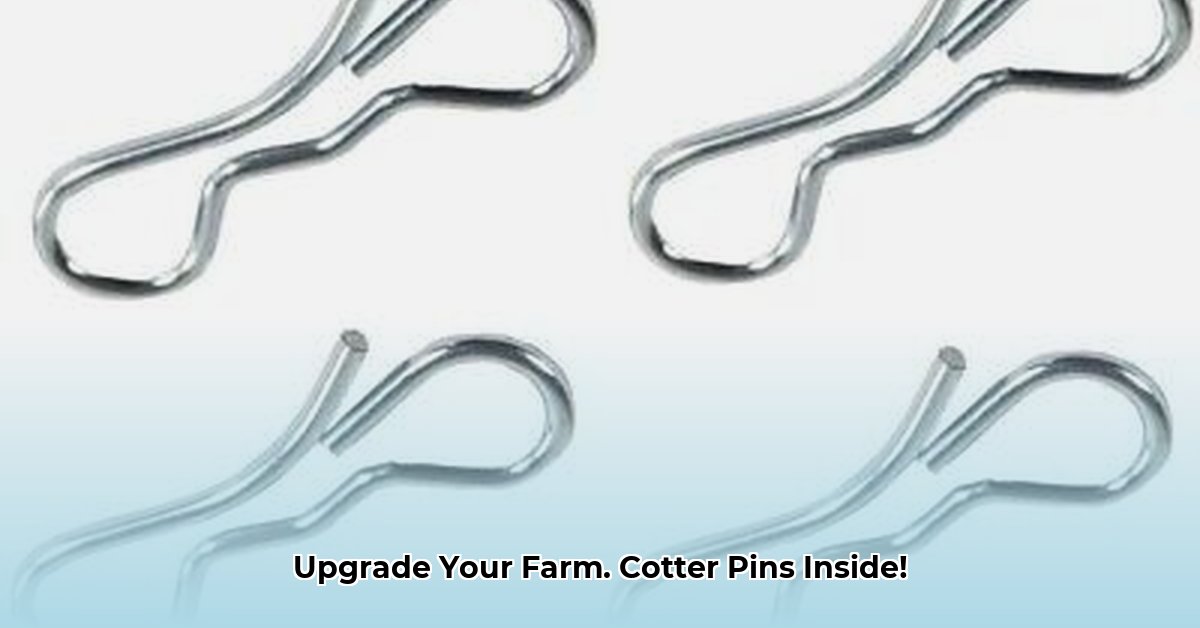
Cotter Pins: Small Parts, Big Impact on Farm Sustainability
Cotter pins might seem insignificant, but these small, inexpensive fasteners play a crucial role in maintaining your tractor and promoting sustainable farming practices. A loose or missing cotter pin can lead to equipment failure, downtime, costly repairs, and even safety hazards. This guide explains why cotter pins are essential, where to find them, and how to use them correctly to maximize farm efficiency and environmental responsibility. For more on maintaining your farm equipment, check out these helpful resources.
Why Cotter Pins Matter
Cotter pins act as safety devices, securing critical joints and connections in your tractor's moving parts. This prevents components from loosening or detaching, crucial for safe and efficient operation. Neglecting cotter pin maintenance can lead to:
- Equipment Failure: A broken cotter pin can cause a part to malfunction, leading to costly repair bills and lost productivity. Imagine the disruption if your planter breaks down mid-season!
- Safety Hazards: Loose or missing cotter pins can create dangerous situations, potentially causing injury to you, your employees, or bystanders.
- Reduced Fuel Efficiency: Malfunctioning parts, often linked to missing cotter pins, lead to increased friction and reduced engine performance, wasting fuel.
- Environmental Impact: Increased fuel consumption directly contributes to higher greenhouse gas emissions, harming the environment and undermining sustainable farming efforts.
Did you know that a single broken cotter pin can lead to a 15% decrease in fuel efficiency in some common tractor operations? Regular maintenance is key to mitigating adverse outcomes.
Sourcing Cotter Pins: Tractor Supply and Beyond
Your local Tractor Supply store is an excellent resource for finding various sizes and types of cotter pins. They offer a wide selection of materials, including steel and longer-lasting stainless steel, at competitive prices. Choosing a reputable supplier guarantees consistent quality, avoiding frustrating delays caused by inferior materials. Other farm supply stores or online retailers also carry cotter pins.
Understanding Cotter Pin Sizes and Types
Cotter pins are categorized by diameter and length. Using the incorrect size weakens connections and increases failure risk. Always consult your tractor's manual for the precise specifications.
Here's a simplified size guide:
| Diameter (inches) | Length (inches) | Material | Typical Use |
|---|---|---|---|
| 1/16 | 1/2 | Steel | Small linkages, fine adjustments |
| 3/32 | 3/4 | Stainless Steel | Slightly more robust applications, corrosion-resistant |
| 1/8 | 1 | Steel | Larger components, heavier-duty applications |
| 1/4 | 1 1/2 | Stainless Steel | Very heavy-duty applications, larger equipment |
Remember, this is a general guide. Always cross-reference with your owner's manual!
Step-by-Step Cotter Pin Replacement
Replacing a cotter pin is straightforward, but proper technique is crucial. Always prioritize safety:
- Safety First: Wear safety glasses and gloves.
- Remove the Old Pin: Use needle-nose pliers to remove the old pin. Penetrating oil can aid stubborn pins.
- Clean the Area: Remove dirt and debris from the hole.
- Insert the New Pin: Insert the new pin, ensuring it's straight and secure.
- Bend the Ends: Carefully bend the ends outwards for a secure hold, but avoid breaking them.
- Inspect the Joint: Double-check the joint's security.
"Regular cotter pin checks are a fundamental part of preventative maintenance," says John Miller, Lead Mechanic at Miller's Farm Equipment. "It's about catching small problems before they become major headaches."
Preventative Maintenance: The Sustainable Approach
Regular equipment inspections are vital for identifying and addressing potential issues early. This includes regularly checking cotter pins for wear and tear. Proactive maintenance saves time, money, and reduces environmental impact by preventing equipment failures and unnecessary fuel consumption.
Key Takeaways:
- Cotter pins are critical components for maintaining your tractor's efficiency and safety.
- Regular inspection and replacement are essential for preventing costly repairs and downtime.
- Tractor Supply is a convenient source for acquiring these vital parts.
- Proactive maintenance contributes significantly to sustainable farming practices by reducing fuel consumption and minimizing environmental impact.
By following these simple steps, you'll contribute to a more productive, sustainable, and environmentally responsible farm operation. Remember, small parts often hold the key to significant gains in efficiency and safety.